
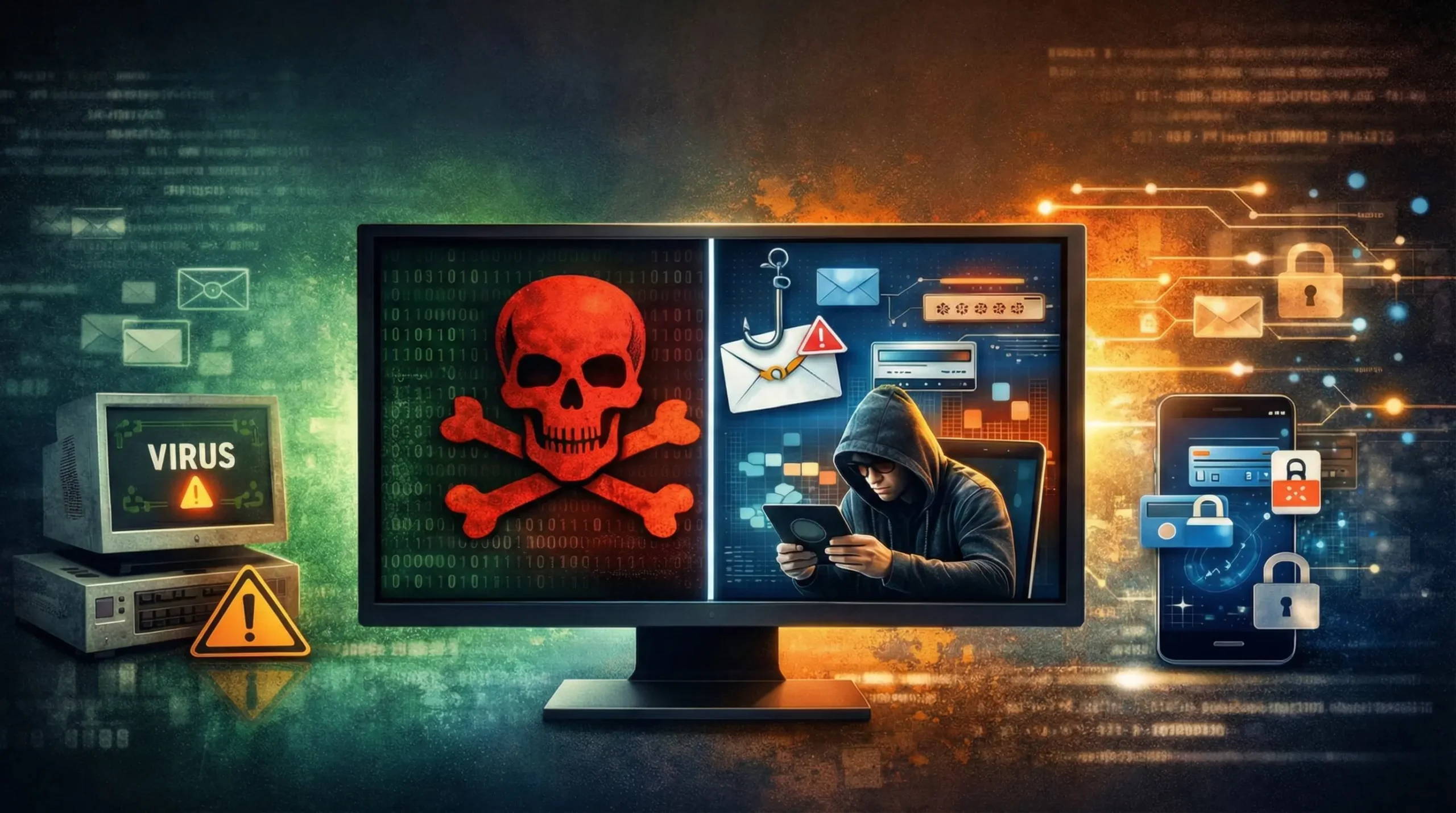
The internet has become an essential part of daily life. From banking and shopping to work and communication, most activities now happen online. While technology has improved significantly, online threats have also evolved.
Cyberattacks today look very different from the obvious computer viruses of the past. Modern threats are more strategic, more automated, and often harder to detect. Understanding how these risks have changed helps users make smarter decisions about protecting their devices and data.
From Disruption to Data Theft
In the early days of widespread internet use, many attacks were designed to cause visible damage. Users might notice:
- Slow performance
- Random pop-ups
- Corrupted files
- System crashes
Today, attackers are usually not trying to disrupt devices. Instead, their goals often include:
- Stealing personal data
- Collecting login credentials
- Accessing financial information
- Selling data on underground markets
The shift from disruption to silent data theft marks one of the biggest changes in modern cyber threats.
Automation Has Made Attacks More Scalable
In the past, many attacks required manual effort. Now, automated systems allow cybercriminals to target thousands—or even millions—of users at once.
Modern attack methods often rely on:
- Automated phishing campaigns
- Bots scanning for vulnerabilities
- AI-generated scam messages
- Large-scale credential stuffing attempts
Because of automation, attackers no longer focus only on high-profile targets. Everyday users are frequently targeted simply because they are connected.
Social Engineering Is More Sophisticated
One major evolution in online threats is the use of social engineering. Instead of breaking into systems directly, attackers try to manipulate people.
Common examples include:
- Emails that appear to come from trusted companies
- Fake delivery notifications
- Messages that create urgency or fear
- Websites that closely mimic legitimate platforms
These tactics work because they exploit trust and routine behavior rather than technical weaknesses.
Attacks Now Target Multiple Devices
Years ago, threats were mainly associated with desktop computers. Today, users rely on:
- Laptops
- Smartphones
- Tablets
- Smart home devices
Each connected device represents a potential entry point. Modern threats often move across devices, especially when accounts and cloud services are linked.
Cloud Services and Remote Work Have Changed the Risk Landscape
The growth of cloud storage, remote work, and shared online platforms has introduced new security considerations. Sensitive information is now:
- Stored remotely
- Shared across networks
- Accessed from different locations
This shift increases convenience but also expands the attack surface. Protecting access credentials has become just as important as protecting the device itself.
Why Understanding These Changes Matters
Online threats are no longer limited to obvious malware infections. They involve a combination of technology, automation, and psychological manipulation.
Recognizing how cyber risks have evolved helps users:
- Identify suspicious activity more quickly
- Understand the limits of basic protection
- Take digital safety more seriously
For a broader overview of how different security tools contribute to online protection, you can explore our main cybersecurity guide.
For additional insight into how cyber threats continue to evolve, resources from the Cybersecurity and Infrastructure Security Agency (CISA) provide up-to-date alerts, threat trends, and practical guidance for individuals and businesses.
Understanding Modern Protection Options
As online threats continue to evolve, relying solely on basic protection may no longer be enough for many users. Modern security solutions are designed to address not only traditional malware, but also phishing attempts, malicious websites, and suspicious behavior across devices.
If you’d like to better understand how different antivirus tools compare in terms of features, protection layers, and usability, you can explore our in-depth guide to the best antivirus software available today.